The Six-Century Journey of the Century Egg
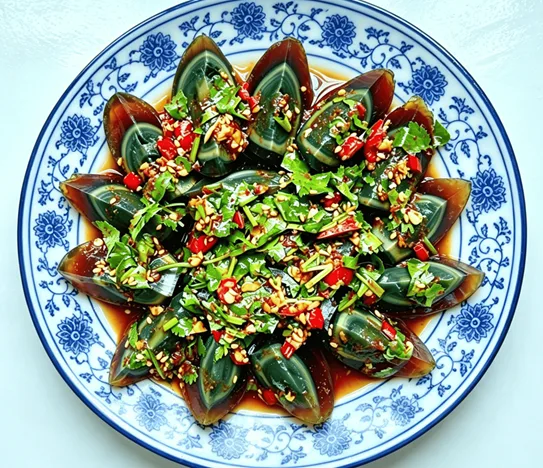
Pidan, known in English as the century egg. It is the product of an ingenious folk tradition from 14th-century China.
I. Introduction: The Cultural Significance of a “Time Capsule”
Imagine this: an ordinary duck egg, coated in mud and ash, left in a corner for weeks. When it finally sees the light of day, it is no longer a liquid egg inside the shell—it has become a dark, translucent, crystalline-solid orb, with a distinct sulfurous aroma. Its flavor combines the richness of cheese with a faint hint of ammonia.
This is no alchemist’s concoction. It is pidan —known in English as the century egg (or sometimes the “thousand-year egg”). It is the product of an ingenious folk tradition from 14th-century China.
For those unfamiliar with it, the century egg often provokes either curiosity or revulsion—the 2011 CNN “most disgusting food” controversy being a case in point. But if we set aside the aesthetic judgment of “right” or “wrong” and place the century egg in the broader context of food science and history, a different picture emerges: this humble egg is an epic tale of humanity’s struggle against time and bacteria, in an age without electricity or refrigeration. Its history is comparable to the fermentation traditions of European cheeses or the evolution of chocolate in the Americas—both are quintessential examples of humanity’s ability to transform the mundane into the extraordinary.
II. Origins: An Accidental Discovery and a Preservation Miracle
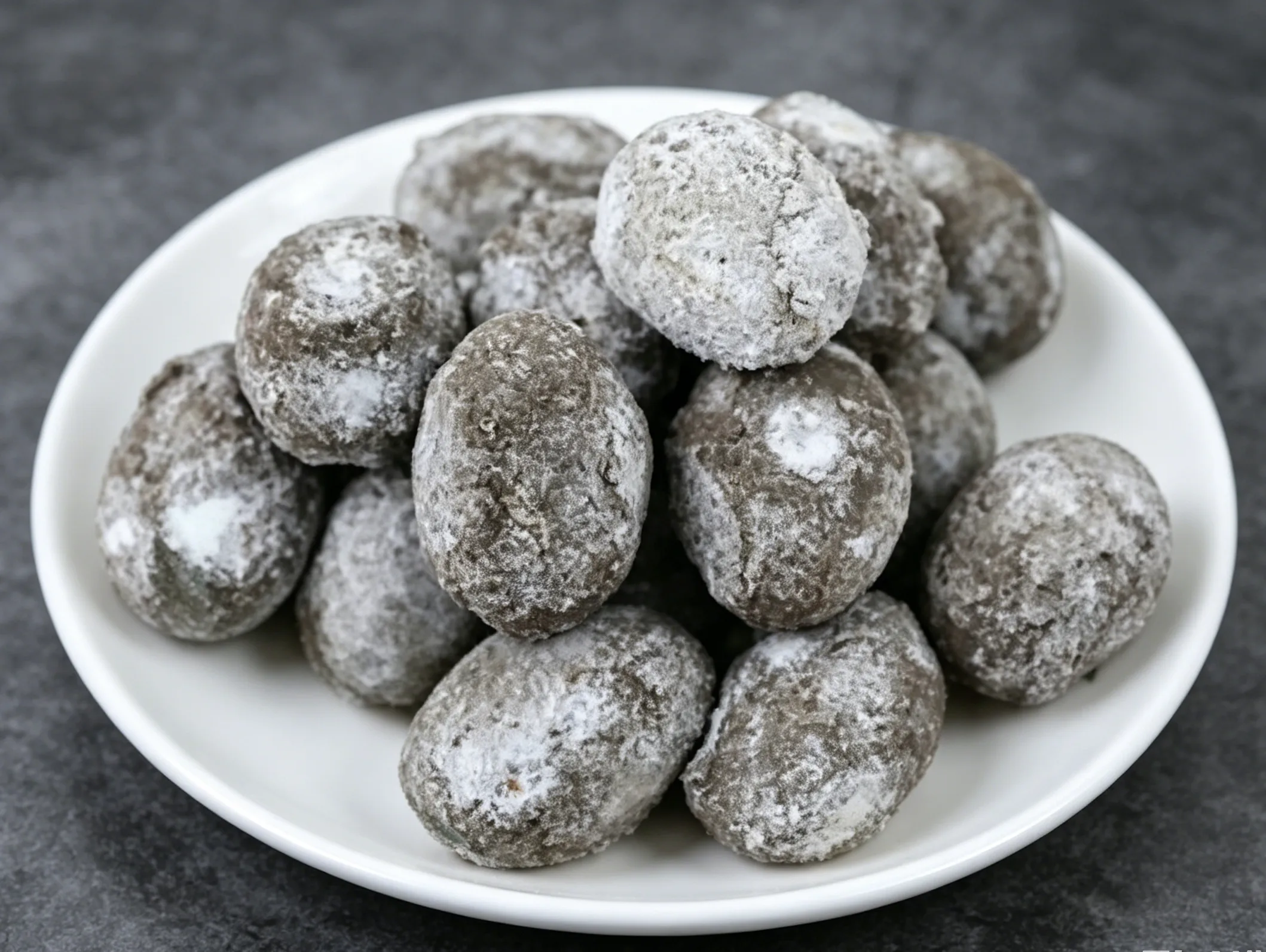
1. The Earliest “Recipe” and the Wisdom of Survival The exact origins of the century egg remain a matter of historical detective work. The earliest textual record currently known appears in the Miscellaneous Records from the Bamboo-island Mountain Studio (Zhuyu Shanfang Zashi), written by Song Xu in 1504, during the Ming Dynasty. At the time, it was given a curious name— “Hundunzi,” or “Chaos Egg.”
The birth of the century egg was entirely accidental—early Chinese farmers unknowingly discovered that the alkaline mixture of lime and plant ash could induce a remarkable transformation in eggs. The text describes a method: mix lime and plant ash with saltwater, bring to a boil, let it cool, and coat the eggs with the paste. After about five to seven days, “the yolk and white became one”—a completely new food was born.
2. The “Noah’s Ark” of Food Preservation In an era without refrigerators, without cold-chain logistics, and without synthetic preservatives, the invention of the century egg carried epochal significance for human survival. We can draw a parallel to Europe’s salted cod (Bacalao) or the Mediterranean’s Parma-style dry-cured ham (Prosciutto) —during long winters, rainy seasons, long-distance migrations, or times of war, fresh protein was extremely perishable. Chinese ancestors discovered that treating eggs with strongly alkaline lime and plant ash not only killed spoilage-causing microorganisms but also allowed eggs to be stored at room temperature for months or even over a year without going bad.
This was, in effect, a “Noah’s Ark” for precious protein. The invention of the century egg was not merely a culinary creation—it was a critical survival strategy. It ensured that ancestors still had access to high-quality nutrition during lean seasons, allowing perishable fresh eggs to travel through time and become a true “strategic reserve.” This was a philosophy of survival born of necessity, a crystallization of Eastern wisdom in humanity’s negotiation with nature.
3. Regional “Claims of Origin” Just as France and Italy argue over the origins of Champagne or Parma ham, various regions in China—Yiyang in Hunan Province, Yuanzhou in Jiangxi Province, and others—each have their own origin legends for the century egg. In Yiyang, for example, the local gazetteer records over 600 years of century egg production, earning it the title “Home of the Pine-Flower Century Egg.” In Yuanzhou, the legend traces back to the Tang-Song period (about 1,000 years ago), telling of a teahouse owner whose ducks happened to lay eggs in a pile of ash mixed with tea leaves and lime—months later, the accidental “spoilage” turned out to be a delicacy. These tales, much like the romantic origin stories of European blue cheeses, are part of each region’s cultural identity.
III. The Science: The Chemistry Behind the “Magic”
1. Alkaline “Cooking” If modern cooking relies on heat, the century egg relies on chemical energy. The process is similar to using an alkaline lye bath to make pretzels—except the century egg’s reaction time is stretched out over weeks.
The alkaline substances in lime (calcium hydroxide) and plant ash act like microscopic “craftsmen,” penetrating the eggshell’s pores and slowly migrating inward. The proteins gradually break down, restructure, and solidify in this alkaline environment.
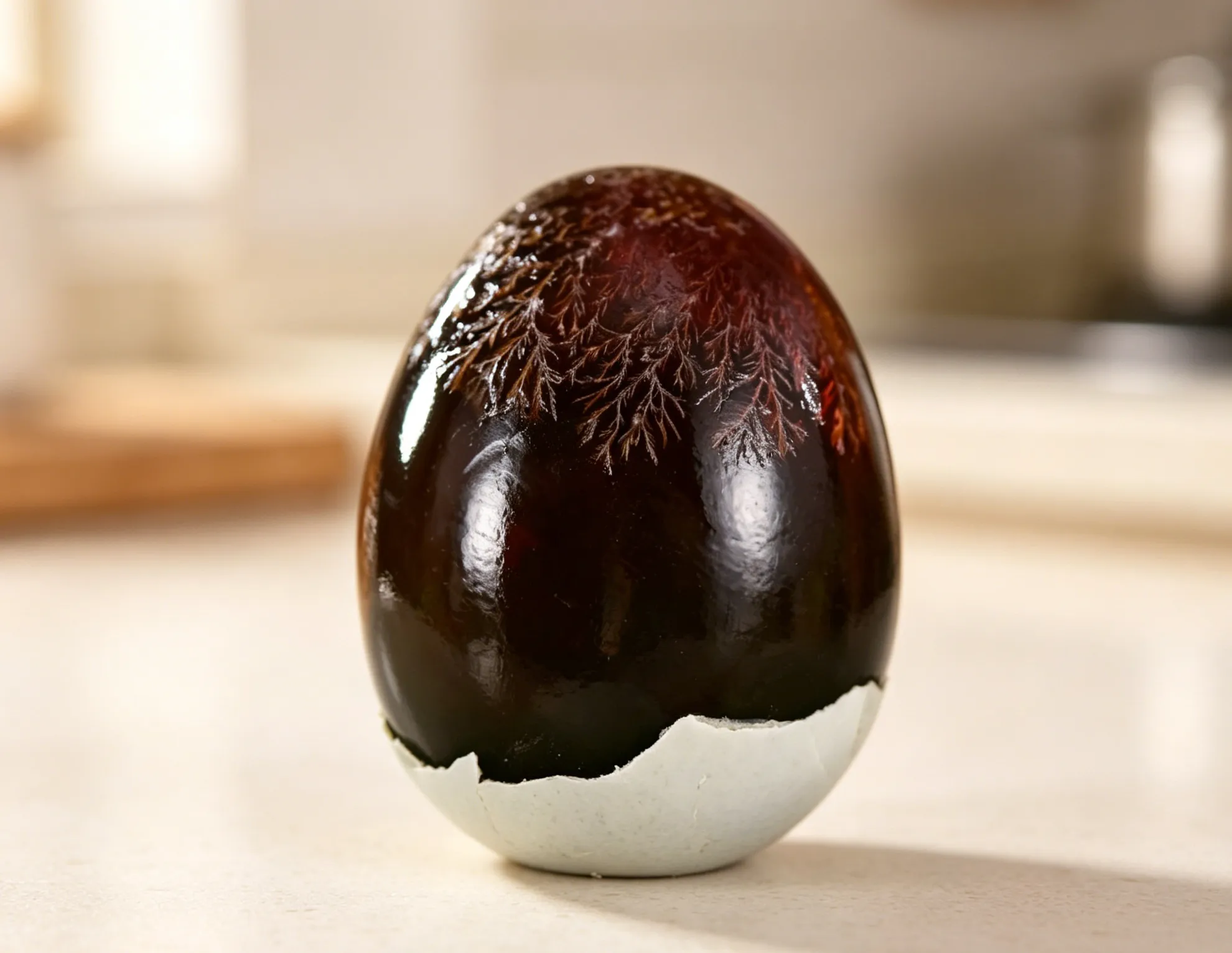
2. What Are “Pine Flowers”? The beautiful pine-branch-like patterns on the egg white are often mistaken for “feathers” or “signs of rot.” In fact, they closely resemble the frost flowers that form on winter windowpanes. Scientifically, they are crystals formed by the combination of amino acid salts (from protein breakdown) and magnesium ions under specific conditions. This is not a sign of spoilage, but rather the “hallmark of authenticity” for a high-quality century egg.
IV. Modern Transformation: From Lead Concerns to Food Safety
1. The Hidden Cost of the Ancient Craft: The Lead Problem Traditional century egg recipes included a critical additive: lead oxide (also known as litharge) . Its function was to prevent the coagulated protein from liquefying again after maturation, thereby preserving color and flavor stability. However, lead is a heavy metal that accumulates in the human body; long-term ingestion damages the nervous system and kidneys, and is particularly harmful to children.
This presents a profound paradox: the ancient preservation technique solved the problem of “starvation,” but in modern society, it introduced the risk of “chronic poisoning.” Our ancestors, lacking modern toxicological knowledge, could not have foreseen the long-term dangers of lead oxide. When science revealed the truth, the century egg industry faced a serious question: how to preserve six centuries of traditional flavor while eliminating this health hazard?
2. The Birth of Lead-Free Processing: A Chemical “Recasting” The solution began to take shape in the 1980s. Chinese food scientists experimented with replacing lead oxide with food-grade copper sulfate and zinc sulfate —metals that can similarly stabilize protein structure without leaving lead residues. This is analogous to the modern food industry replacing sucrose with natural sweeteners like stevia , or the petroleum industry replacing tetraethyl lead with unleaded additives —the goal remains the same, but the means are upgraded.
The initial rollout was not smooth. The supply of food-grade copper sulfate was long monopolized by a handful of companies, making it expensive and unaffordable for many small workshops. It was not until after 2013, when the supply chain improved, that lead-free processing gradually became widespread.
3. The “Hard Constraint” of National Standards The real turning point came on December 1, 2015. China implemented a new national standard for century eggs (GB/T 9694-2014), which mandated the elimination of lead-based processing techniques. The previous standard allowed a maximum lead content of 3 mg/kg; the new standard reduced it to 0.5 mg/kg — the same level as everyday foods like fish, meat, and tofu. In 2022, the standard was further tightened to 0.2 mg/kg , identical to the lead limit for unprocessed fresh eggs.
4. Clarifying a Misconception: “Lead-Free” Does Not Mean “Zero Lead” One common point of confusion needs clarification: “lead-free century eggs” do not contain absolutely zero lead. Lead is ubiquitous in the natural environment—fresh eggs themselves, water, soil, and air all contain trace amounts. “Lead-free” simply means that the lead content is controlled below the safety threshold.
Let the data speak: A 2024 test of 200 batches of locally produced century eggs in Chongqing, China, found that only 11 batches had detectable lead, with concentrations ranging from just 0.005 to 0.029 mg/kg — about 2.5% of the national standard limit. This level is far lower than everyday foods like mushrooms (0.13 mg/kg) and shellfish (0.08 mg/kg) . In other words, eating a century egg today exposes you to no more lead than eating a freshly caught fish.
5. An Unexpected Bonus: Actually Healthier What’s more, modern lead-free processing has brought an unexpected health benefit: studies have found that after fresh duck eggs are transformed into century eggs, cholesterol and fat content drop by more than 20% . A duck egg that was once high in cholesterol, through the alkaline “time capsule” transformation, actually becomes a relatively healthier food.
Today’s century egg is no longer that ancient compromise of “trading health for preservation.” Our ancestors used lime and plant ash to solve the problem of “how to preserve food”; modern people use copper sulfate and zinc sulfate to solve the problem of “how to preserve food safely.” Over six centuries, the craft has changed, but the underlying quest—“how to make food travel through time”—remains unchanged.
V. Cultural Symbols: From Congee Shops to Intangible Heritage
1. A “Mosaic” of Regional Food Cultures Just as pasta has different sauces in different parts of Italy, the century egg takes on distinct regional personalities in its Chinese preparations:
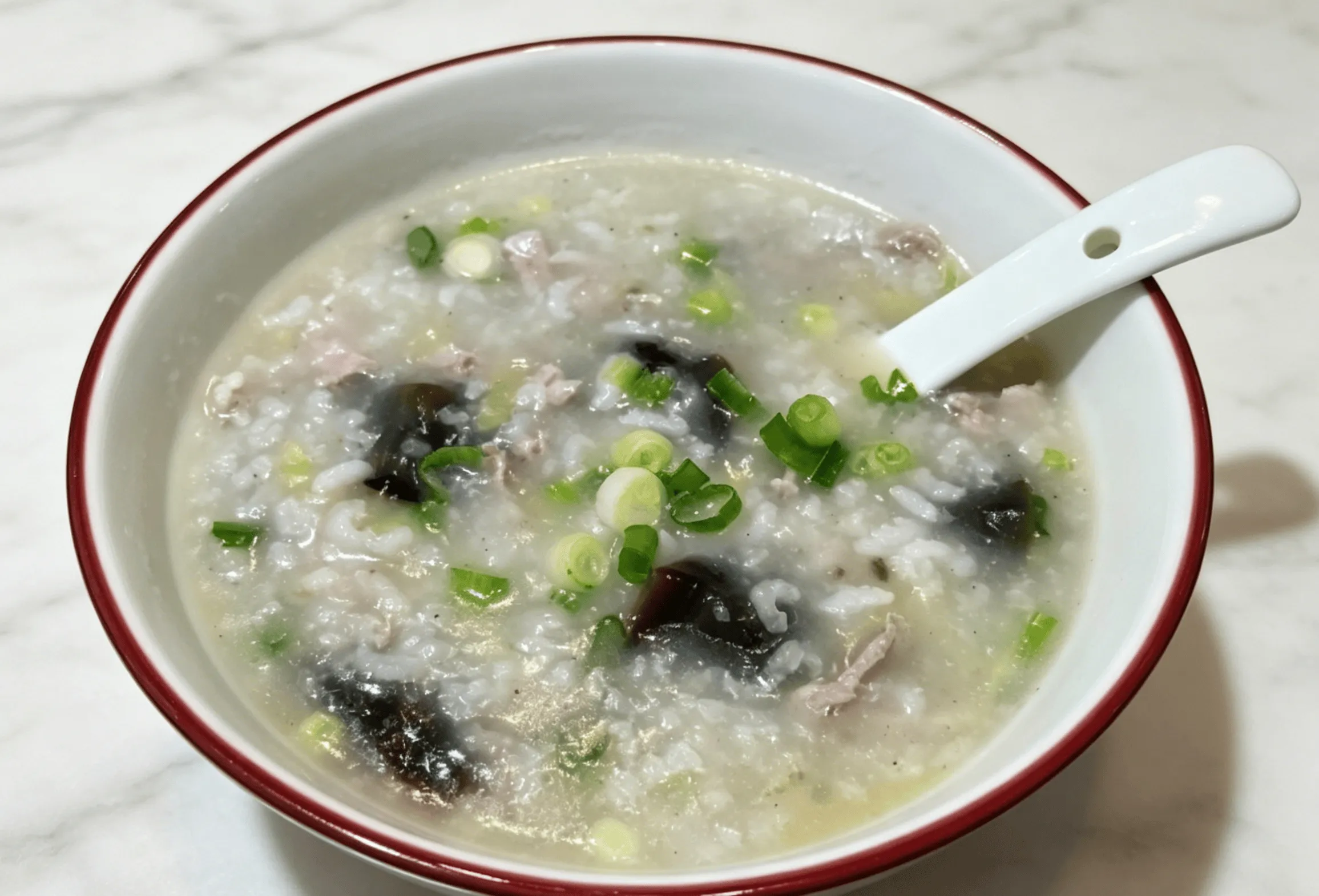
- Guangdong (the mild, temperate South) : Chopped and simmered into plain congee to make “century egg and pork congee.” This gentle treatment—similar to the French technique of braising ingredients in stock—aims to “tame” the century egg’s boldness, rendering it warm, soft, and comforting.
- Southwest China (the fiery Sichuan-Chongqing region) : Pounded with green chili peppers and garlic in a stone mortar. This rough yet refined method echoes Mexico’s molcajete (stone mortar) tradition, emphasizing the vigorous collision of spices and ingredients.
- Northeast China (the bitter cold North) : Diced and stuffed into sausages—a preservation strategy adapted to harsh winters.
2. Ritual and Heritage Century egg production techniques have been inscribed on various levels of China’s “Intangible Cultural Heritage” lists. This is roughly equivalent to UNESCO’s recognition of “Intangible Cultural Heritage of Humanity,” such as Japan’s washoku or the Mediterranean diet.
In Xiuwu County, Henan Province, master craftsmen still observe a ritual of “cleansing hands and offering prayers” before the production process begins. This brings to mind the solemn ceremonies of Champagne cellar masters before opening the vintage—a gesture not merely of technical reverence, but of gratitude for ancestral wisdom.
3. The Chinese Table Experience: A Culinary Chameleon
Across Chinese dining tables, the century egg’s final form before consumption is as diverse as the nation itself, often taking on the flavor profile of whichever ingredient it accompanies. Here are the most iconic transformations:
- Cold Dish: Sliced into wedges and drizzled with a vibrant sauce made from soy, vinegar, and chili oil. The cool, firm jelly-like texture absorbs the savory-spicy dressing, making it a perfect palate-cleanser before a heavy meal.
- Congee: Diced and slowly simmered into rice porridge with shredded lean pork. As the egg dissolves, it releases a deep, savory richness that transforms a simple breakfast staple into a hearty comfort food.
- Stir-fry: Quick-tossed with green peppers or vegetables. The high heat slightly melts the surface, creating a creamy coating around the firm yolk and white, marrying the century egg’s earthy taste with fresh vegetal notes.
This adaptability—appearing in soups, salads, and sizzling woks—explains why the century egg holds a distinct place in Chinese gastronomy, bridging humble home kitchens and lavish banquet spreads.
VI. Cross-Cultural Encounters: From “Devil’s Egg” to Global Sensation
1. The CNN Incident and the “Bias of the Senses” In 2011, CNN ranked the century egg first on its “world’s most disgusting foods” list, describing it as “like a devil’s egg.” This triggered a strong backlash from the 2 billion people worldwide who eat century eggs.
This incident is a classic case in anthropology, comparable to a first encounter with Iceland’s fermented shark (Hákarl) or Sweden’s fermented herring (Surströmming) —the shock of the unfamiliar. As the 16th-century French philosopher Michel de Montaigne famously wrote: “Everyone calls barbarity what is not his own custom.” The issue was never about the food itself, but about the cultural lens through which it was viewed. Under pressure, CNN ultimately apologized, acknowledging its disrespect toward another culture.
2. Correcting a Misconception: The Lead Fear Is Outdated It is worth noting that much of the aversion to century eggs at the time was fueled by the “leaded” reputation. But as we detailed in Chapter IV, China fully transitioned to lead-free processing in 2015—today’s century eggs have lead levels comparable to fresh eggs. If the CNN controversy were to happen today, journalists would be facing not a “possibly lead-laden” dark egg, but a health-tested food product validated by modern science. This fact alone should dispel a considerable portion of the prejudice.
3. Reversal of Fortune: The Globalization of Taste Interestingly, prejudice is gradually eroding as cross-cultural exchange deepens. In December 2023, Chinese-made pine-flower century eggs—labeled as “preserved duck eggs” or “century eggs”—landed on the shelves of American Costco , triggering a buying frenzy: Chinese consumers stockpiled them, and many stores cleared three months’ worth of inventory in just three days. From “most disgusting” to “supermarket smash,” the century egg’s global image reversal testifies to the gradual opening of palates in an age of globalization. It is no longer merely a taste of nostalgia for the Chinese diaspora—it is slowly becoming part of the world’s culinary mosaic.
VII. Conclusion: The Litmus Test of Civilization
The six-century journey of the century egg is a microcosm of human cultural exchange.
When we trace back to its original purpose—under the harsh natural conditions of an era without modern preservation technology—our ancestors used the humblest materials (ash, salt, and alkali) to build a microscopic chemical fortress, successfully transforming perishable fresh eggs into durable “strategic grain reserves.” This was a philosophy of survival born of necessity, a crystallization of Eastern wisdom in humanity’s negotiation with nature.
When modern science revealed the dangers of lead, the century egg industry proactively completed its transformation from “leaded” to “lead-free,” embracing modern health standards while preserving ancient flavors. Our ancestors solved the problem of “how to preserve”; our generation solved the problem of “how to preserve safely.”
Today, this dark, crystal-studded orb that carries the memory of survival has become a “litmus test” for the world’s cultural tolerance. When faced with the unfamiliar, do we choose to scoff or to taste? The story of the century egg tells us that food history is, in fact, a history of humanity slowly shedding its biases and exploring common ground amid differences. And to understand an egg is to understand the Other, and thereby to understand ourselves.